A) domestic resident purchases a domestic asset.
B) domestic resident purchases a foreign asset.
C) foreign resident purchases a domestic asset.
D) foreign resident purchases a foreign asset.
F) A) and D)
Correct Answer

verified
Correct Answer
verified
A) the European Monetary Union.
B) the European Monetary System.
C) the European Central Bank.
D) the European Bank for Reconstruction and Development.
F) All of the above
Correct Answer
verified
Correct Answer
verified
A) domestic currency price of foreign currency.
B) foreign currency price of domestic currency.
C) price of domestic goods in terms of foreign goods.
D) price of foreign goods in terms of domestic goods.
F) A) and B)
Correct Answer
verified
Correct Answer
verified
A) Money demand becomes more erratic.
B) Participating central banks may not agree on monetary policy.
C) It is akin to dollarization.
D) The capital account becomes difficult to define.
F) A) and B)
Correct Answer
verified
Correct Answer
verified
A) domestic output, but has no effect on the domestic price level or the nominal exchange rate.
B) the domestic price level, but has no effect on domestic output or the nominal exchange rate.
C) the nominal exchange rate, but has no effect on domestic output or the domestic price level.
D) the domestic price level and the nominal exchange rate, but has no effect on domestic output.
F) None of the above
Correct Answer
verified
Correct Answer
verified
A) make laws stipulating the exchange rate.
B) modify money supply.
C) modify government expenses.
D) modify taxes.
F) C) and D)
Correct Answer
verified
Correct Answer
verified
A) It increases it.
B) It decreases it.
C) It has no impact.
D) It depends.
F) A) and C)
Correct Answer
verified
Correct Answer
verified
A) foreign direct investment.
B) foreign capital investment.
C) a portfolio inflow.
D) a portfolio outflow.
F) A) and C)
Correct Answer
verified
Correct Answer
verified
A) the current account surplus plus the capital account surplus.
B) the current account surplus plus the capital account deficit.
C) the current account deficit plus the capital account surplus.
D) the current account deficit plus the capital account deficit.
F) All of the above
Correct Answer
verified
Correct Answer
verified
A) amplifies the effect of this disturbance on both domestic output and the domestic nominal money supply.
B) amplifies the effect of this disturbance on domestic output and dampens the effect on the domestic nominal money supply.
C) dampens the effect of this disturbance on domestic output and amplifies the effect on domestic nominal money supply.
D) dampens the effect of this disturbance on both domestic output and the domestic nominal money supply.
F) B) and D)
Correct Answer
verified
Correct Answer
verified
A) increases domestic output and has no effect on the domestic price level.
B) decreases domestic output and has no effect on the domestic price level.
C) increases the domestic price level and has no effect on domestic output.
D) decreases the domestic price level and has no effect on domestic output.
F) None of the above
Correct Answer
verified
Correct Answer
verified
A) expansionary fiscal policy is necessary.
B) contractionary monetary policy is necessary.
C) expansionary monetary policy is necessary.
D) no policy intervention is necessary.
F) B) and C)
Correct Answer
verified
Correct Answer
verified
A) both real and nominal shocks from abroad.
B) real shocks from abroad, but not from nominal shocks from abroad.
C) nominal shocks from abroad, but not from real shocks from abroad.
D) neither real nor nominal shocks from abroad.
F) A) and C)
Correct Answer
verified
Correct Answer
verified
A) that foreign and domestic assets are not perfect substitutes.
B) the existence of non-traded goods.
C) that consumers in different countries have different preferences.
D) that costs of production are not the same in all countries.
F) None of the above
Correct Answer
verified
Correct Answer
verified
A) the nominal exchange rate is always fixed.
B) prices are flexible.
C) net exports depends on the relative price of foreign goods to domestic goods.
D) the nominal exchange rate is always flexible.
F) All of the above
Correct Answer
verified
Correct Answer
verified
A) an asset of the domestic government.
B) a liability of the domestic government.
C) held by private banks.
D) are unnecessary.
F) C) and D)
Correct Answer
verified
Correct Answer
verified
A) following the rules of the Bretton Woods Agreement.
B) dollarization.
C) establishing a currency board.
D) mutual agreements establishing a common currency.
F) C) and D)
Correct Answer
verified
Correct Answer
verified
A) a devaluation of the domestic currency.
B) a revaluation of the domestic currency.
C) a depreciation of the domestic currency.
D) an appreciation of the domestic currency.
F) C) and D)
Correct Answer
verified
Correct Answer
verified
A) fiscal policy and monetary policy are powerless.
B) fiscal policy is an effective stabilization tool.
C) a change in current total factor productivity increases output.
D) monetary policy is an effective stabilization tool.
F) A) and D)
Correct Answer
verified
Correct Answer
verified
A) 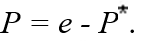
B) 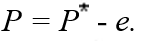
C) 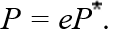
D) 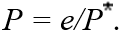
F) A) and B)
Correct Answer
verified
Correct Answer
verified
Showing 21 - 40 of 60
Related Exams